Loose skin across the stomach can feel especially frustrating because it often shows up after you have already put in the work. Maybe you lost weight, had a baby, changed your training routine, or simply noticed that your midsection no longer snaps back the way it used to. Skin tightening treatments for stomach concerns are designed for exactly this moment – when you want visible improvement without automatically jumping to surgery.
The good news is that you have options. The less simple part is that not every option is built for the same kind of skin laxity. Some treatments are better for mild crepey texture. Others are more useful when the skin looks loose after fat loss. And in some cases, the best results come from pairing skin tightening with body contouring, lymphatic support, and realistic treatment spacing.
What causes stomach skin to loosen?
The stomach area goes through more change than almost any other part of the body. Pregnancy, weight fluctuations, aging, sun exposure, and reduced collagen production all play a role. Even people who eat well and exercise consistently can notice that the skin over the abdomen looks softer, thinner, or less firm.
Collagen and elastin are the key pieces here. They help skin stay resilient and spring back into place. As those structural proteins decline, the skin becomes less able to recover after stretching. That is why someone can feel healthy and strong but still see laxity in the lower stomach or around the belly button.
This is also why treatment planning matters. If the issue is mostly skin quality, one type of approach may work well. If there is still a layer of stubborn fat under the skin, you may need a strategy that addresses both contour and firmness.
How skin tightening treatments for stomach areas work
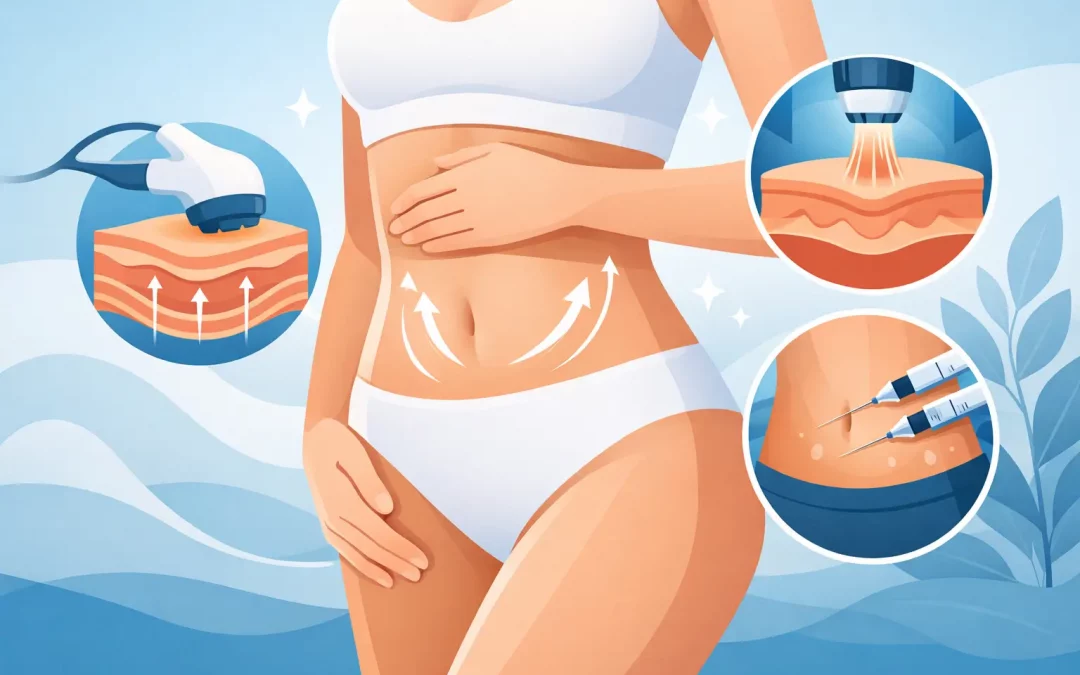
Most non-invasive stomach tightening treatments aim to stimulate collagen, improve circulation, and encourage the skin to contract over time. Different technologies do that in different ways. Some use cold, some use heat, and some use mechanical stimulation or massage-based support.
What matters most is not whether a treatment sounds trendy. It is whether it matches your tissue quality, goals, and timeline. A treatment that works beautifully for someone with mild postpartum laxity may not be the right fit for someone with significant excess skin after major weight loss.
Non-invasive options are appealing because they require little to no downtime and can fit into a wellness routine more easily than surgery. But they also ask for patience. Results tend to build gradually, which is often a better fit for clients who want natural-looking change and a plan they can maintain.
The most common non-invasive options
Cryotherapy-based skin tightening
Cold-based aesthetic treatments are designed to support skin firmness and body contouring without incisions or recovery time. In the stomach area, targeted cold therapy can help stimulate the body’s natural response, support circulation, and complement a broader sculpting plan. For clients who want a wellness-forward option that fits into an active lifestyle, this can be especially appealing.
This approach is often best for mild to moderate laxity rather than heavily hanging skin. It can be a strong fit for people who want to improve tone, support post-weight-loss refinement, or maintain progress after body contouring. When paired with healthy habits and a customized treatment schedule, cryotherapy can become part of a bigger transformation rather than a one-time fix.
Radiofrequency tightening
Radiofrequency uses controlled heat to stimulate collagen remodeling in the deeper layers of the skin. This is one of the most widely used non-surgical tightening options for the abdomen because it targets laxity directly and can help improve texture over a series of sessions.
Many people like radiofrequency because it is comfortable and requires little interruption to normal life. The trade-off is that results are not instant. You usually need multiple appointments, and the best outcome often appears gradually as collagen develops.
Ultrasound-based treatments
Ultrasound technology sends focused energy below the skin to trigger collagen production. It can be effective for tightening, though not every stomach area is the ideal candidate depending on fat thickness, skin condition, and treatment goals.
For some clients, ultrasound is a useful option when the goal is firmer skin without significant surface treatment. For others, it may feel less practical if they want a more comprehensive body-sculpting experience. This is where a personalized consultation makes a real difference.
Muscle stimulation and body contouring combinations
Sometimes the stomach does not just look loose because of skin. A softer abdominal wall, reduced muscle tone, fluid retention, or uneven contour can all add to the issue. Treatments that support muscle engagement or body contouring may improve the overall look of the midsection, even if they are not strictly skin tightening treatments.
This is an important distinction. Better contour can make the stomach appear firmer, but contouring alone does not always solve skin laxity. The strongest results often come from combining therapies rather than relying on one device to do everything.
When non-invasive treatment works well
The best candidates for non-surgical stomach tightening usually have mild to moderate skin laxity, realistic expectations, and a willingness to complete a treatment series. If your skin still has some elasticity and you want visible improvement rather than a dramatic surgical change, you are likely in the right category.
This can include postpartum clients once their provider clears them for treatment, active adults maintaining a weight-loss result, and anyone noticing age-related softening through the abdomen. It is also a good fit for people who want to invest in confidence and recovery without taking time away from work, training, or family life.
Where people get disappointed is expecting one session to reverse years of stretching or collagen loss. Stomach skin responds best when the plan is consistent and customized.
When surgery may be the better option
There is no benefit in pretending every case should be treated non-invasively. If you have significant overhanging skin, separated abdominal muscles after pregnancy, or very advanced laxity after major weight loss, a surgical procedure such as a tummy tuck may offer the more meaningful result.
That does not make non-invasive treatment a failure. It simply means the right tool matters. In some cases, people start with non-invasive care because they want improvement without downtime. In others, they use skin tightening treatments after surgery or weight loss to help maintain the look of the area.
A trustworthy provider should be honest about this. Real guidance is not about pushing the most expensive option. It is about helping you choose the approach that fits your body and your goals.
What results should you realistically expect?
Think refinement, not reinvention. Most non-invasive stomach treatments improve firmness, texture, and the overall appearance of the area over time. You may notice skin that looks smoother, a midsection that feels more toned, or a better response in clothing and activewear.
Visible changes often build across several weeks because collagen remodeling takes time. Some people see early improvement in skin texture or puffiness, especially when treatments support circulation and lymphatic movement. More noticeable tightening usually takes a series.
Results also depend on how you support your body between sessions. Hydration, stable weight, movement, nutrition, and recovery all matter. Skin is a living tissue, and it responds better when your overall wellness is working with the treatment instead of against it.
How to choose the right provider
This part matters as much as the technology itself. Look for a provider who evaluates your skin, listens to your goals, and explains what is realistic. You want someone who can tell the difference between loose skin, stubborn fat, bloating, and weak muscle tone because each one changes the treatment plan.
A strong provider will also talk about combination care. For example, stomach tightening often works better when paired with lymphatic support or body sculpting strategies that help the tissue respond more efficiently. That kind of customized planning is usually a better sign than a one-size-fits-all package.
If you are local to Glastonbury, working with a wellness-focused studio that understands both aesthetics and recovery can be especially valuable. The stomach area often responds best when treatment is approached as part of a full-body strategy, not just a cosmetic quick fix.
The mindset that gets the best outcome
The people who tend to be happiest with their results are not looking for punishment or perfection. They are looking for alignment. They want their outside to reflect the effort they already put into their health, movement, and self-care.
That is where stomach tightening treatments can be powerful. They can support confidence, help restore momentum, and give you another tool to feel strong in your body again. If your skin has changed, it does not mean you failed. It may simply mean your body needs a more targeted kind of support.
Give yourself permission to choose the option that fits your life, your comfort level, and your goals now. The best treatment plan is the one you can commit to consistently – and the one that helps you feel more at home in your own skin.
 English
  Spanish