Loose skin rarely shows up all at once. It tends to appear gradually – along the jawline, around the stomach, on the thighs, or anywhere skin has been stretched by time, weight changes, sun exposure, or simply the natural slowdown of collagen production. If you have been wondering how do skin tightening treatments work, the short answer is this: they create a controlled response in the skin that encourages it to rebuild, contract, and look firmer over time.
That sounds simple, but the real answer is more interesting. Skin tightening is not about forcing the skin into place for a day or masking laxity with temporary swelling. The best non-invasive treatments work with your biology. They stimulate the systems that support stronger, smoother, more resilient skin.
How do skin tightening treatments work in the skin itself?
To understand tightening treatments, it helps to know what is changing when skin starts to loosen. Firm skin depends on a supportive internal structure made largely of collagen and elastin. Collagen gives skin strength and density. Elastin helps it bounce back after movement and stretching. As we age, both begin to decline. Add in inflammation, environmental stress, fat loss, hormonal changes, or rapid weight loss, and skin can start to look thinner, softer, and less supported.
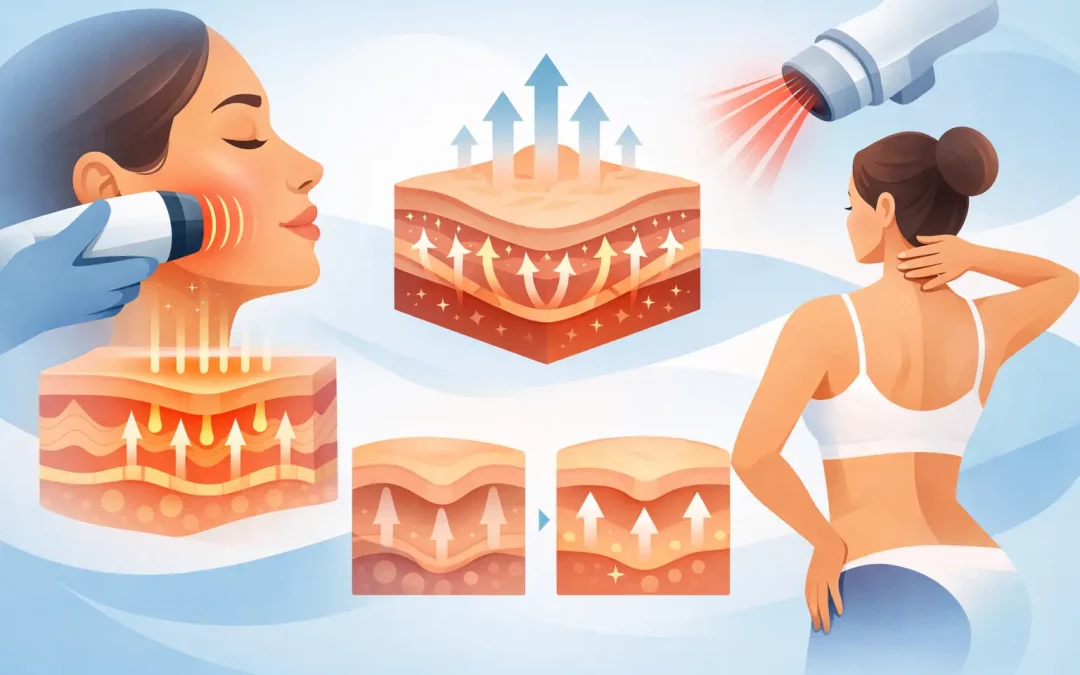
Most skin tightening treatments are designed to trigger a repair response below the surface. They do this by using thermal energy, cold exposure, stimulation of circulation, or a combination of these mechanisms. The goal is not damage for the sake of damage. The goal is controlled stimulation. When the skin senses that kind of stimulus, it starts producing more collagen and remodeling tissue over the following weeks and months.
That is why results are often progressive rather than instant. You may notice a fresher, tighter appearance early on, but the deeper changes usually develop gradually as the skin rebuilds itself.
The main mechanisms behind skin tightening
Different technologies approach skin laxity in different ways, but most work through one or more core pathways.
Collagen stimulation
This is the foundation of most tightening treatments. When a treatment creates controlled stress in the deeper layers of the skin, fibroblasts – the cells responsible for producing collagen – become more active. Over time, new collagen forms and existing collagen fibers can reorganize, creating a firmer look.
This is why many providers recommend a series instead of a single session. Collagen remodeling is a process, not a switch you flip.
Tissue contraction
Some treatments create a more immediate tightening effect by heating collagen-rich tissue. Heat can cause existing collagen fibers to contract, which may give the skin a subtly tighter appearance early on. Then, as the body responds, longer-term collagen production can continue to improve texture and firmness.
Improved circulation and lymphatic support
Skin health is tied closely to blood flow, oxygen delivery, and waste removal. When circulation improves, tissue tends to look healthier and more vibrant. When lymphatic flow is supported, puffiness and fluid stagnation may decrease. This does not replace collagen remodeling, but it can improve how the skin looks and feels during a treatment plan.
Reduced inflammation and metabolic support
In some wellness-based approaches, the focus is not only on the skin itself but also on the internal environment affecting it. Chronic inflammation can interfere with repair processes and tissue quality. Treatments that support recovery and reduce systemic stress may complement aesthetic skin goals, especially for clients who want a more holistic plan.
Where cryotherapy fits into skin tightening
Cryotherapy is different from heat-based tightening systems, but it still works through stimulation. Controlled cold exposure causes blood vessels to constrict and then reopen, which can support circulation and tissue response. In aesthetic applications, cold-based treatments are often used to energize the skin, reduce puffiness, and support a firmer appearance.
For body-focused services, cold can also be part of a broader plan that includes sculpting, lymphatic support, and skin tightening protocols. The appeal is clear for clients who want a non-surgical option that fits into a bigger wellness routine. You are not just targeting one isolated issue. You are working on recovery, inflammation, circulation, and visible tone together.
That said, expectations matter. Cryotherapy can be a powerful part of a skin-firming strategy, but the degree of tightening depends on your starting point, skin quality, age, consistency, and whether the laxity is mild, moderate, or severe.
What kinds of skin tightening treatments are available?
The category is broad, and that is why people get confused. Skin tightening can include radiofrequency, ultrasound-based devices, laser treatments, cryotherapy-based services, microneedling with energy, and supportive treatments that improve circulation and skin quality.
Some methods rely mainly on heat. Others focus on cold exposure and tissue stimulation. Some are more aggressive and come with downtime, while others are designed for people who want to return to work, the gym, or daily life right away.
This is where customization matters. A treatment that makes sense for loose skin under the chin may not be the best fit for skin texture on the abdomen or thighs. Likewise, someone dealing with early skin laxity after weight loss may need a different plan than someone with mature, sun-damaged skin.
What results can you realistically expect?
This is the question that matters most, and the honest answer is: it depends.
Non-invasive skin tightening can improve firmness, texture, tone, and overall skin quality, especially when laxity is mild to moderate. It can be a strong option for people who want visible improvement without surgery, needles, or extended downtime. Many clients also appreciate that these treatments can fit into a larger self-care and longevity plan rather than feeling like a drastic one-time intervention.
But non-invasive does not mean dramatic in the same way surgery can be dramatic. If there is significant loose skin, stretched tissue, or deeper structural sagging, a non-surgical treatment may improve the look of the area without fully transforming it. That is not a flaw. It is simply the trade-off for choosing a gentler, lower-downtime approach.
For the right person, though, that trade-off is worth it. Natural-looking improvement, gradual collagen support, and a plan that works with your schedule can be exactly what you want.
How long does it take to see tighter skin?
Some people notice an early change after a session, often because of temporary tissue contraction, improved circulation, or reduced puffiness. The more meaningful changes usually take longer. Collagen production takes time, so many people start seeing more noticeable improvement several weeks after treatment, with continued progress over a series.
Maintenance also matters. Skin keeps aging. Lifestyle still affects tissue quality. Sun exposure, hydration, nutrition, sleep, exercise, and inflammation all influence how well your skin holds its structure. A good treatment can move you forward, but your daily habits help determine how long that progress lasts.
Who is a good candidate for skin tightening?
In general, the best candidates are people with mild to moderate skin laxity who want improvement without surgery. They are often proactive about wellness and open to a treatment plan rather than searching for a one-session miracle.
You may be a good fit if you have noticed early sagging, thinning skin, post-weight-loss softness, or areas that look less toned even though you take care of yourself. These treatments can also make sense for active adults who want body and skin support that aligns with recovery, circulation, and whole-body wellness.
If your skin laxity is more advanced, the best provider will tell you that honestly. A strong consultation should never oversell what a treatment can do. It should match the method to your biology, your goals, and your timeline.
Why treatment plans work better than one-off sessions
Skin tightening is usually more effective when it is approached as a process. One session may create a temporary boost or begin a response, but a series gives your skin repeated signals to repair and strengthen. That is often when the real change starts to build.
This is also why integrated care can be valuable. Pairing skin tightening with lymphatic support, recovery-focused services, or body contouring may create a more complete result, especially if your goals include both appearance and overall tissue health. At Cryo Glow, that whole-body perspective is part of what makes non-invasive care feel more intentional and more personalized.
The best plan is not always the most aggressive one. It is the one your body can respond to consistently.
If you are considering skin tightening, think beyond the marketing language and ask a better question: what is this treatment asking my skin to do? The strongest options are the ones that encourage your body to rebuild from within, because that is where firmer, healthier-looking skin really starts.
 Spanish
  English