You can be lean, active, and doing all the right things – and still feel frustrated by loose skin in one area and stubborn fat in another. That is exactly why skin tightening vs fat freezing can feel confusing at first. These treatments are both non-invasive, both popular in body contouring, and both designed to help you feel more confident in your skin. But they do very different jobs.
The real question is not which treatment is better. It is which concern you are actually treating. If the issue is pinchable fat that is not responding to workouts or clean nutrition, fat freezing may be the better fit. If the issue is lax, crepey, or less elastic skin, skin tightening is usually the more targeted solution. Many people need one. Some need both. The best outcomes come from knowing the difference before you book.
Skin tightening vs fat freezing: what is the difference?
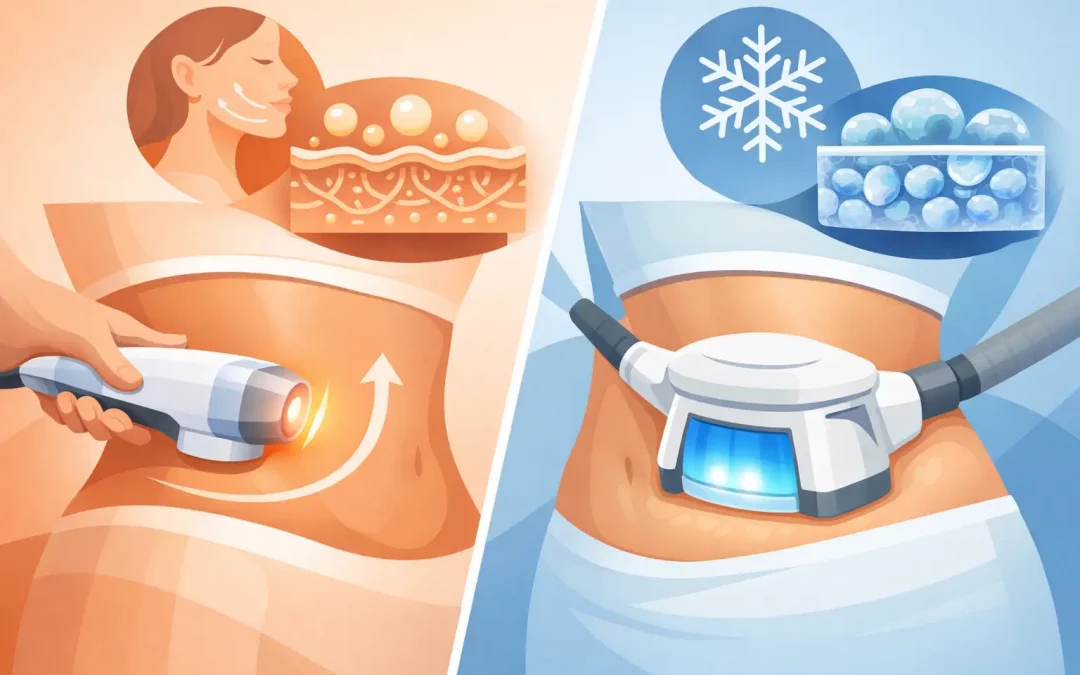
Fat freezing is designed to target fat cells. Skin tightening is designed to support firmer-looking skin. That sounds simple, but people often mix them up because both can improve the shape of an area.
Fat freezing works by exposing targeted pockets of fat to controlled cold temperatures. The goal is to stress fat cells enough that the body gradually clears them over time. It is not a weight-loss treatment. It is a body contouring treatment for localized areas like the abdomen, flanks, thighs, arms, or under the chin, depending on the device and protocol.
Skin tightening, by contrast, focuses on the look and feel of the skin itself. Depending on the treatment method, it may stimulate circulation, support collagen activity, and help the skin appear firmer and smoother. This is especially relevant after weight loss, after pregnancy, with age-related skin laxity, or in areas where the skin has lost some snap and tone.
If you imagine the body in layers, fat freezing targets what is underneath the skin, while skin tightening focuses more on the skin envelope over the top.
When fat freezing makes more sense
If you can grab a small roll or pocket of fat and that is the feature bothering you most, fat freezing may be the right starting point. This is common in people who are already relatively healthy but cannot seem to change specific trouble spots through exercise alone.
A good candidate is usually close to their stable weight and looking for refinement, not a dramatic overhaul. Fat freezing tends to work best when expectations are realistic. It can reduce stubborn fat in selected areas, but it does not replace nutrition, strength training, or a consistent recovery routine.
There is also a timing factor. Results are gradual because the body needs time to process the treated fat cells. If someone wants immediate tightening for an event next week, fat freezing may not match that goal. It is better suited for people who want a strategic, longer-view approach to contouring.
That trade-off matters. The benefit is a non-surgical option with no need for anesthesia or downtime in the traditional sense. The limitation is patience. You are waiting for your body to do the work.
When skin tightening is the better fit
Skin tightening is often the better choice when the area does not look full so much as soft, loose, or slightly sagging. You might notice it on the stomach, arms, thighs, jawline, or around the knees. Sometimes the issue shows up after fat loss. Sometimes it is simply part of aging, collagen decline, or hormonal changes.
This treatment path makes sense for people who want firmer-looking skin texture and a more toned appearance without surgery. It is also a smart conversation to have if someone is considering fat reduction but already has mild skin laxity. Reducing fat in an area with loose skin can sometimes make that looseness more noticeable if no tightening strategy is included.
That does not mean skin tightening is magic. If someone has significant excess skin, a non-invasive treatment may offer improvement, but not the kind of dramatic change that surgery can create. Still, for mild to moderate laxity, it can be a powerful option for people who want visible improvement with a wellness-forward approach.
Skin tightening vs fat freezing for common body goals
A flatter stomach and a firmer stomach are not always the same goal. That is where people get tripped up.
If the abdomen has a stubborn layer of fat, fat freezing may help contour it. If the abdomen looks loose, crepey, or less toned after weight changes, skin tightening may be more helpful. If both are happening at once, a combined plan often makes the most sense.
The same logic applies to other areas. Love handles usually point to fat reduction. Loose upper arms may call for tightening. Thighs can go either way. Under the chin is another area where both fat and skin quality matter. This is why a personalized assessment matters more than trend-driven treatment shopping.
Your body goal should lead the treatment choice, not the other way around.
What about cellulite, texture, and tone?
This is where nuance matters. Cellulite is not exactly the same as excess fat, and it is not exactly the same as loose skin either. It involves the structure under the skin, connective tissue, circulation, and fat distribution. Some people see a smoother appearance when skin firmness improves or when body contouring is paired with supportive therapies like lymphatic work, but cellulite is rarely a one-treatment issue.
If your concern is more about skin texture and tone than actual fullness, skin tightening usually aligns better with that goal than fat freezing alone.
Can you combine both treatments?
Yes, and for the right person, that is often where the most balanced results happen.
A combined approach can be helpful when there is both stubborn fat and mild skin laxity in the same area. First, contouring can reduce the bulk. Then, skin tightening can support a firmer finish. In other cases, treatments may be alternated or paired with wellness support such as lymphatic drainage, hydration strategies, movement, and recovery care to help the body respond well.
This kind of planning fits a more customized model of care. Instead of treating one concern in isolation, the focus becomes how your body is responding overall. That is especially valuable for people who want aesthetic results but also care about inflammation, recovery, and long-term maintenance.
At a wellness-focused studio like Cryo Glow, that bigger-picture view matters. Looking better and feeling better do not have to live in separate categories.
What results should you realistically expect?
The most empowering choice is the one made with realistic expectations.
Fat freezing can help reduce targeted fat pockets, but it will not tighten significantly loose skin, change your overall body weight in a major way, or replace healthy habits. Skin tightening can improve firmness and support a more toned look, but it will not eliminate a true pocket of fat if that is the main issue.
Results also depend on the area being treated, your starting point, your skin quality, your age, lifestyle factors, and how consistently you follow the recommended treatment plan. Some people respond quickly. Others need multiple sessions and time.
That is not a flaw in the process. It is biology. The body changes on its own timeline, and the best non-invasive treatments work with that timeline instead of forcing it.
How to choose between skin tightening vs fat freezing
Start with one honest question: when you look at the area bothering you, do you see fullness, looseness, or both?
If it is fullness, especially in a localized area, fat freezing may be the more direct route. If it is looseness or loss of firmness, skin tightening is likely the better match. If it is both, ask about a treatment plan that addresses contour and skin quality together.
It also helps to think about your bigger goals. Are you preparing for a milestone and want your skin to look firmer? Are you already fit and trying to smooth out one resistant area? Are you coming off a weight-loss journey and want support that helps your body look as strong as you feel? The right treatment should match the outcome you actually want, not just the name that sounds familiar.
A strong provider will not push a one-size-fits-all answer. They will assess the tissue, talk through your goals, explain the trade-offs, and build a plan around your body rather than around a generic package.
You do not need to guess your way into body contouring. When you understand whether the issue is fat, skin, or a mix of both, the path gets much clearer – and the results are far more likely to feel worth the investment. Your best next step is the one that respects your biology, supports your confidence, and moves you closer to feeling at home in your body.
 Spanish
  English