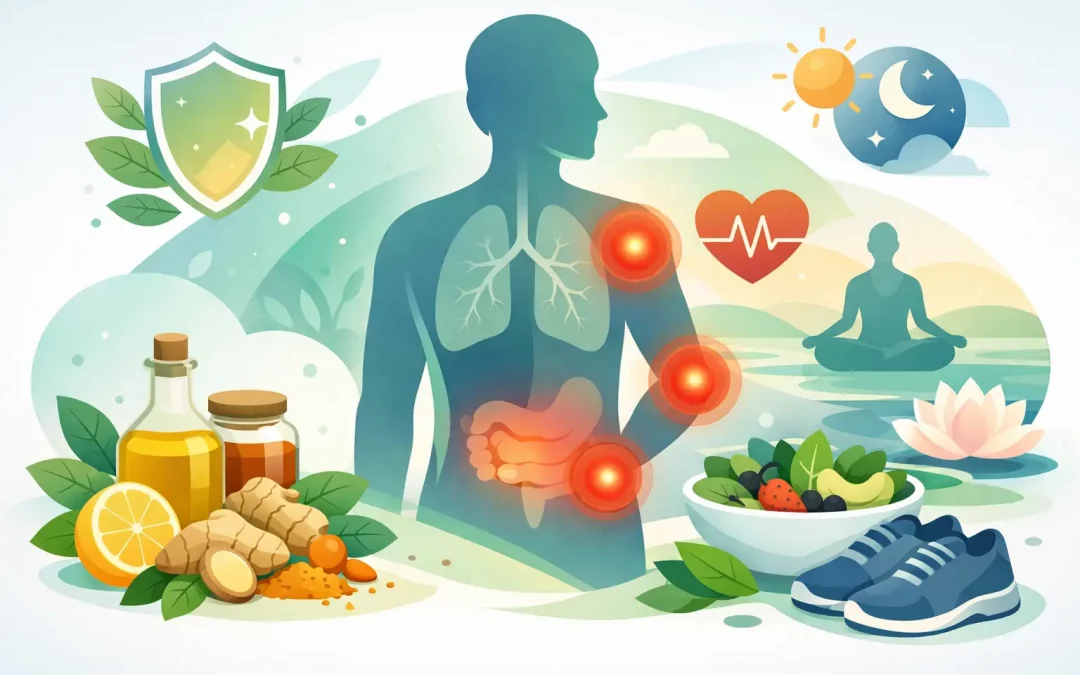
That puffy, achy, sluggish feeling is not always about getting older or being too busy. Often, it is your body signaling that inflammation is running higher than it should. If you have been wondering how to reduce inflammation naturally, the goal is not to chase a quick fix. It is to lower the daily inputs that keep your system irritated and support the habits that help your body recover, regulate, and perform better.
Inflammation is not the enemy. It is part of healing. You need it after a workout, an injury, or when your immune system is fighting something off. The problem starts when that response stays switched on for too long. Chronic inflammation can show up as joint pain, stubborn bloating, skin flare-ups, slow workout recovery, fatigue, brain fog, or the sense that your body just does not feel as responsive as it used to.
For a lot of adults, especially those balancing work, workouts, stress, and not enough rest, inflammation becomes a lifestyle issue before it becomes a medical one. That is why natural strategies matter. They are the foundation. They help you feel better now and support long-term health, recovery, and confidence.
How to reduce inflammation naturally starts with your daily inputs
If you want real change, start with what your body has to process every day. Food, sleep, stress, movement, and recovery all influence inflammatory load. You do not need a perfect routine. You do need consistency.
One of the biggest drivers is excess ultra-processed food. A diet high in added sugars, refined carbs, fried foods, and heavily processed snacks can push inflammation higher over time, especially when it is paired with poor sleep and chronic stress. On the other hand, meals built around whole foods tend to support a calmer internal environment.
That does not mean eating for inflammation has to be restrictive. It usually looks more like adding than subtracting. Colorful produce, berries, leafy greens, olive oil, nuts, seeds, beans, and fatty fish all bring nutrients that support recovery and help regulate inflammatory pathways. Herbs and spices like turmeric, ginger, cinnamon, and garlic can also be useful, although they work best as part of an overall pattern rather than a miracle ingredient.
Hydration matters more than many people realize. When you are underhydrated, your body does not manage circulation, digestion, and tissue recovery as efficiently. Some people interpret that draggy, swollen feeling as needing another supplement or a more aggressive detox, when the simpler answer may be more water and fewer dehydrating habits.
Sleep is one of the fastest ways to lower inflammatory stress
If you are training hard, trying to lose body fat, managing pain, or investing in your skin, sleep is not optional recovery time. It is active repair. Even a few nights of poor sleep can increase inflammatory markers and make you more sensitive to stress, cravings, and soreness.
This is where the trade-off is real. Many high-performing adults protect workouts and work meetings more than bedtime. But if your body is inflamed, pushing harder while sleeping less usually backfires. Recovery slows down. Hunger signals get louder. Energy crashes become more common. Skin can look duller. Joints feel stiffer. You may still be functioning, but not at your best.
Aim for a consistent sleep schedule, a cooler room, and less screen stimulation before bed. If your nights are disrupted, start with what is realistic. An extra 30 to 45 minutes of quality sleep can make a noticeable difference over time.
Movement helps, but the right dose matters
Exercise can reduce inflammation naturally, but only when it is balanced with recovery. That distinction matters. Gentle, regular movement improves circulation, insulin sensitivity, lymphatic flow, and stress regulation. Walking, mobility work, strength training, and moderate cardio can all be powerful.
But more is not always better. If you are doing intense workouts every day, ignoring soreness, and living in a stressed state, your body may stay in a cycle of breakdown without enough repair. That can leave you feeling inflamed rather than strong.
A smart approach includes both challenge and restoration. Some days should push performance. Other days should help your system reset. Walking after meals, stretching, light strength work, and recovery-based sessions are not low-value. They are often what allows progress to continue.
This is especially relevant for people dealing with sports recovery, body recomposition goals, or ongoing aches. When inflammation is high, your body responds better to strategy than punishment.
Stress keeps the inflammation cycle going
You can eat well and exercise regularly, but if your nervous system stays on high alert, inflammation may still stay elevated. Chronic psychological stress affects hormones, sleep quality, digestion, and immune regulation. In simple terms, your body has a harder time calming down.
That does not mean you need to remove all stress. Most adults cannot. It means building in ways to come out of stress more efficiently. Breathwork, time outside, lower-stimulation mornings, journaling, prayer, meditation, and even ten minutes of quiet after work can help shift your state.
The key is choosing practices you will actually repeat. A complicated wellness routine that lasts three days does less for you than a simple reset you use every afternoon.
Natural support for inflammation can include targeted recovery tools
When people ask how to reduce inflammation naturally, they often think only about diet. Food matters, but recovery therapies can also support the process when used thoughtfully. Cold exposure is one example that has gained attention for a reason.
Cryotherapy is often used to help support muscle recovery, reduce temporary soreness, and help the body feel less burdened after intense physical stress. Some people also find that cold-based treatments help them feel more energized and less puffy. That said, results depend on the person, the goal, and the timing. If someone is dealing with an acute injury, training fatigue, or lingering discomfort, recovery support may feel very different than it does for someone focused on skin tightening or general wellness.
Other modalities, including lymphatic support and massage-based recovery, may also help reduce that heavy, stagnant feeling some clients describe when inflammation and fluid retention are part of the picture. This is where customization matters. The best plan is not always the most aggressive one. It is the one that matches your body, your schedule, and what you are trying to improve.
Foods and habits that tend to make inflammation worse
It helps to know what may be working against you. Regularly eating high-sugar foods, drinking excess alcohol, smoking, staying sedentary for long stretches, and under-sleeping can all contribute. So can overtraining, especially when paired with low protein intake or not enough calories overall.
Some people also notice that specific foods seem to trigger symptoms like bloating, skin irritation, headaches, or joint discomfort. That can happen, but it is worth being careful here. Not every uncomfortable symptom means you need to eliminate entire food groups. If patterns are consistent, tracking them can help. If symptoms are more severe or confusing, medical guidance is the better move.
Natural inflammation support should make your life more sustainable, not more restrictive.
How to reduce inflammation naturally without overcomplicating it
If your current routine feels scattered, start with the basics you can maintain for the next two weeks. Build most meals around whole foods. Prioritize protein and plants. Drink more water. Walk daily. Protect your sleep. Create at least one small stress reset in your day. If you train hard, match that effort with recovery.
Then pay attention to what changes. You may notice less bloating, steadier energy, better digestion, improved workout recovery, fewer aches, or clearer skin. Those are meaningful signs that your body is shifting into a better rhythm.
For some people, the next step is adding personalized support. That might mean structured recovery treatments, bodywork, or a wellness plan that looks at inflammation, circulation, and lifestyle together instead of treating every symptom as a separate issue. At Cryo Glow, that whole-body perspective is part of what makes recovery and aesthetics work better together.
If you have severe pain, unexplained swelling, autoimmune concerns, or symptoms that keep getting worse, natural strategies should not replace medical care. They work best as a strong foundation, not a reason to ignore bigger issues.
The good news is that your body is usually responsive when you give it the right conditions. Small, repeatable choices can lower inflammatory stress, improve recovery, and help you feel more like yourself again. Start with what feels doable, stay consistent, and let your routine become part of your results.
 Spanish
  English