Loose skin rarely shows up all at once. It tends to sneak in around the jawline, under the eyes, or across the cheeks, right when you start feeling like your skincare is doing less than it used to. That is usually the moment people begin looking into skin tightening treatments for face and realizing there is no single best option for everyone.
Some treatments focus on collagen stimulation. Others reduce puffiness, support circulation, or create a firmer look through cold exposure and tissue response. The right choice depends on what you are actually seeing in the mirror, how quickly you want to notice change, and how much downtime you are willing to accept.
What skin tightening treatments for face actually do
Most facial tightening treatments are really about improving structure. Skin loses firmness over time because collagen and elastin production slow down, hydration shifts, and repeated facial movement changes how the skin sits over underlying tissue. Weight changes, sun exposure, stress, and inflammation can make that process more visible.
That is why tightening is not always about making skin “smaller.” In many cases, it is about helping skin look more supported, more toned, and less lax. Some treatments work at the surface. Others target deeper layers where collagen remodeling happens. Some give an immediate refreshed look, while others build gradually over several weeks.
This is where expectations matter. If someone has severe sagging, a non-invasive treatment may improve firmness but not create a surgical-level lift. On the other hand, if the concern is mild to moderate laxity, early jowling, post-weight-loss looseness, or tired-looking skin, non-surgical treatments can make a meaningful difference.
The most common skin tightening treatments for face
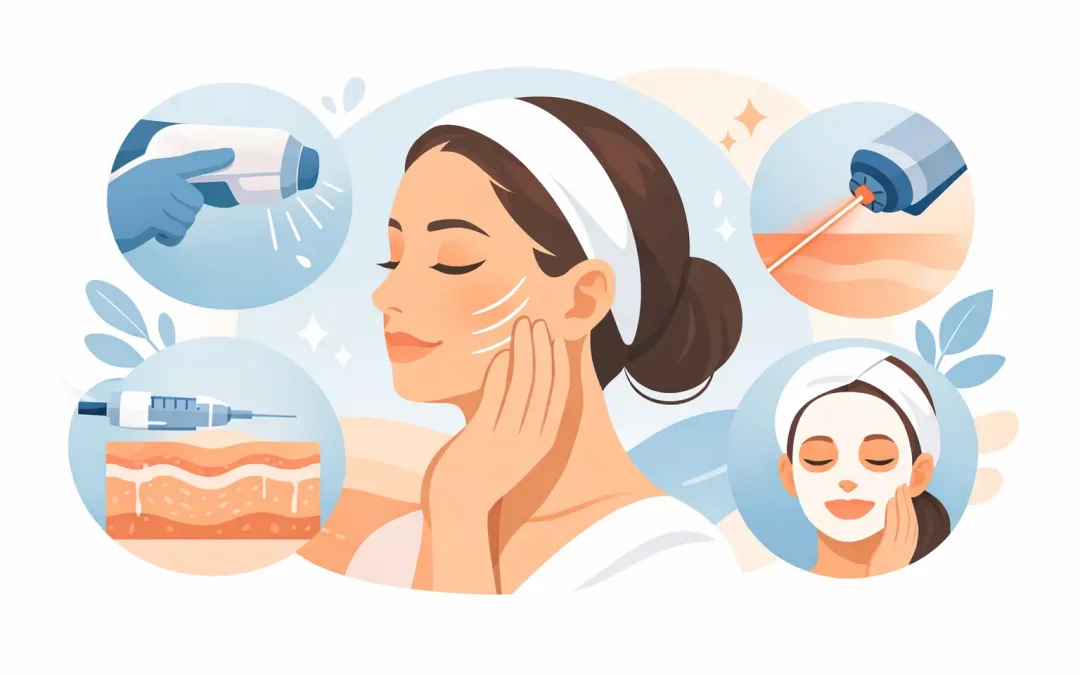
Cryotherapy facials are appealing because they sit at the intersection of aesthetics and wellness. Cold exposure can help reduce puffiness, support circulation, and create a visibly tighter, more refreshed appearance. Many clients like this option because it feels energizing and requires no downtime. It can be especially attractive for people who want to support skin tone while also prioritizing inflammation reduction and overall recovery.
Cryotherapy is often best thought of as part of a broader skin strategy rather than a one-time fix. It can help the face look firmer and more awake, and with consistent sessions, many people notice better tone and a healthier-looking glow. The trade-off is that results are usually progressive and maintenance matters.
Radiofrequency, often called RF, is one of the better-known non-invasive options for facial tightening. It uses heat to stimulate collagen production in deeper skin layers. People often choose RF for mild to moderate laxity around the cheeks, jawline, and lower face. Results tend to build over time, which can be a plus if you want a natural-looking change, but it also means patience is part of the process.
Ultrasound-based treatments also target deeper tissue and are often chosen by people who want more structural support without surgery. These treatments can be effective, especially for lifting along the jawline or under the chin, but they may involve some discomfort and typically carry a higher price point than lighter treatments.
Microneedling with radiofrequency combines controlled skin injury with heat-based collagen stimulation. This approach can be useful when someone is dealing with texture concerns and laxity at the same time. It may offer more dramatic collagen remodeling than surface-level treatments, but downtime tends to be greater, especially if redness or swelling is a concern.
Laser treatments can help tighten skin too, depending on the type used. Some focus more on resurfacing, while others stimulate deeper collagen response. Lasers can be effective, but they are not the right fit for every skin tone or every schedule. Recovery time and sun sensitivity are real considerations.
How to choose the right treatment for your face
The best treatment is the one that matches your actual goal. If you want your skin to look less tired, less puffy, and more toned with no recovery time, a cold-based facial treatment may make more sense than a more aggressive option. If your main concern is deeper laxity along the lower face, you may need a treatment that reaches further beneath the surface.
Age is only one piece of the picture. A very active person in their 30s may notice skin laxity from stress, inflammation, or weight fluctuation. Someone in their 50s may have great skin quality but want support around the jawline. This is why personalized treatment planning matters more than chasing whatever treatment is trending online.
It also helps to be honest about your timeline. Some people are preparing for an event and want to look fresher quickly. Others are more interested in long-term collagen support and are comfortable with a series of sessions. Those are different goals, and they often call for different treatment paths.
Why non-invasive options appeal to wellness-minded clients
For many people, facial tightening is no longer just a beauty decision. It is part of a bigger self-care and health optimization mindset. Clients want treatments that support confidence without forcing them into major downtime, harsh recovery, or an all-or-nothing approach.
That is one reason cryotherapy-based services have gained attention. They align with a broader wellness model that values circulation, inflammation control, recovery, and visible skin benefits at the same time. If you already think about your body in terms of performance, resilience, and longevity, this kind of treatment feels more connected to your lifestyle than a purely cosmetic intervention.
There is also something powerful about consistency. A lot of facial rejuvenation comes down to doing the right things repeatedly, not chasing a dramatic result once and hoping it lasts forever. Non-invasive treatments can fit into that long-term rhythm more easily.
What kind of results should you realistically expect?
This is where a lot of disappointment can be avoided. Skin tightening treatments can improve firmness, definition, and texture, but they work best when expectations are grounded. If your skin has mild laxity, early signs of aging, or a dull, deflated look, the right treatment plan can make you look noticeably more lifted and refreshed.
If your concern is significant sagging, very loose skin, or heavy jowls, non-surgical treatments may still help, but they are likely to produce improvement rather than total correction. That does not mean they are not worth doing. It means success should be measured by healthier-looking skin, better contour, and more confidence in your appearance.
Results also depend on what you do between appointments. Hydration, protein intake, sleep, sun protection, and inflammation management all affect skin quality. Treatments can stimulate change, but your daily habits influence how well your skin responds.
When combination treatments make more sense
One of the biggest mistakes people make is expecting one service to do everything. Skin can be lax, puffy, dehydrated, and uneven at the same time. A treatment that supports tightening may not fully address fluid retention or skin texture.
That is why combination plans often get better results. For example, a client might use cryotherapy facials to support tone, circulation, and a firmer look while also incorporating another collagen-focused treatment over time. Someone dealing with facial puffiness may also benefit from lymphatic support, especially if inflammation is part of what makes the face look less defined.
This kind of layered approach tends to feel more realistic and more sustainable. Instead of asking one treatment to solve every concern, it builds a strategy around how the skin actually behaves.
Who is a good candidate for facial skin tightening?
Good candidates are usually people with mild to moderate skin laxity who want visible improvement without surgery. They may be noticing softer contours, less bounce in the skin, or a face that looks more tired than it feels. They are often looking for treatments that fit into a busy life and support both appearance and overall well-being.
The best candidates are also open to a process. Tightening usually works best through consistency, not urgency. If you are willing to treat your skin the same way you treat fitness or recovery – with a smart plan and follow-through – you are more likely to feel good about your results.
At a wellness-driven studio like Cryo Glow, that personalized approach matters. The goal is not just to offer a treatment. It is to help you choose a path that supports your skin, your schedule, and the way you want to feel in your body.
If your face looks a little less firm than it used to, that does not mean you need the most aggressive option on the menu. It usually means it is time to choose a treatment plan that works with your biology, supports your confidence, and gives your skin a reason to respond.
 English
  Spanish